
4 Simple Ways To Winterize Your Windows And Reduce Your Heating Bill
Energy bills tend to skyrocket in the winter months for a couple of reasons that are fairly simple to fix. The number one problem has to do with window insulation. Many of the old homes in Portland have the original leaded glass windows which are beautiful, and give the homes their historic charm, but they are not insulated. The old single pane glass acts as a thin barrier from the outside elements, but it does nothing to prevent the external temperature from getting in and affecting your room temperature. There are several ways to winterize windows in order to cut down on energy costs. Here are some of the most popular options out there for winterizing your windows.

Storm Windows
If your budget allows installing storm windows over the existing glass is the most energy efficient way to winterize windows, short of replacing all of the windows to insulated vinyl ones. Storm windows are an additional pane of glass that are installed on the interior or exterior of the existing windows. According to industry leader Larson Doors, “Windows are a primary source of heat loss in a home because they are poor insulators and often a source of air infiltration. Adding storm windows over existing windows greatly reduces these breaches in energy efficiency, keeping your home warmer in the winter and cooler in the summer.” They estimate that you will save $35.00 a year for each window that has a storm window installed.

An example of an installed exterior storm window.
Indoor/Outdoor Window Insulator Kits
If you don’t mind the look, another option is temporary interior or exterior window insulation. These inexpensive DIY window insulation kits can be found online here through Amazon.com, or at most local hardware stores. Beaumont Hardware sells the same kit as Amazon, both online and in their store, for a comparable price. The kits consist of window insulation film and a roll of double-sided mounting tape. You tape the film around the window and use blow dryer to create a seal. Once tight, the film acts as a barrier between the outside cold air and your window. Window insulator kits are an appealing option for homeowners looking to winterize windows because they are less expensive than storm windows and do not require off-season storage. However, because they are temporary you will have to buy more the following year.
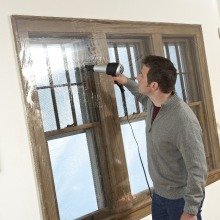
Installing the insulation kit.
Cellular Blinds
If storm windows are not in your budget, or you are not interested in installing plastic insulators, double-celled window blinds are another great long-term solution to winterize windows. They are one of the more expensive options out there, but you will be able to use them year-round. Blinds will help insulate the rooms from the cold air in the winter and keep the warm air out in the summer. An added bonus is that you will have more privacy from the your neighbors. Based on personal experience, I recommend the top-down bottom-up cordless blinds such as these from Levolor.

Top down, bottom up shades.
Curtains
Installing curtains inside of your home is a fun way to go about winterizing your windows. Many people hang curtains as a way to add color and privacy to their rooms, but if you choose the right type of curtains they can actually help insulate your windows, too. Look for double-lined curtains that match your interior décor and hang them up! Chances are you will be able to find great deals on curtains at places like Homegoods, Marshalls, and Amazon.com.
Hopefully one of the above products in within your budget and will allow you to easily winterize your windows for the colder months.
Do your windows currently have any of the above options on them?
Are you going to be installing any additional insulation to further winterize your windows to reduce heating costs?
Interested in winterizing the rest of your home, too? Check out our post on winterizing your pipes.